


When selecting research compounds in Australia, match the material to the intended laboratory work, vial format and available analytical documentation. The Therapeutic Goods Administration (TGA) is the relevant regulator for therapeutic goods. Research compounds are not approved for human therapeutic use, according to the TGA. A research-use-only label does not replace a review of the product documentation.
Purity is one practical consideration. A Certificate of Analysis can show what testing was reported, while clear vial details help you match a catalogue option to your research requirements.
This guide explains how to compare research compound catalogues and vial sizes, assess purity testing, and understand how research-use-only status relates to TGA regulation in Australia. Use the steps below to evaluate product information before selecting laboratory materials.
Key Takeaways
- Match catalogue options and vial formats to the specific needs of your laboratory work.
- Use product documentation to understand what analytical testing is reported and what it can tell you.
- Keep research-use-only status distinct from approval for therapeutic use when assessing compliance.
- Compare Australian suppliers on clear product information, testing documentation and research-focused support.
Research compound catalogue and vial sizes
A useful catalogue makes it easier to compare compounds by name, stated quantity and research format. In Australia, choose materials that fit your laboratory protocol, planned analyses and handling capacity. A larger vial is not automatically the better fit if your study requires less material or a different compound.
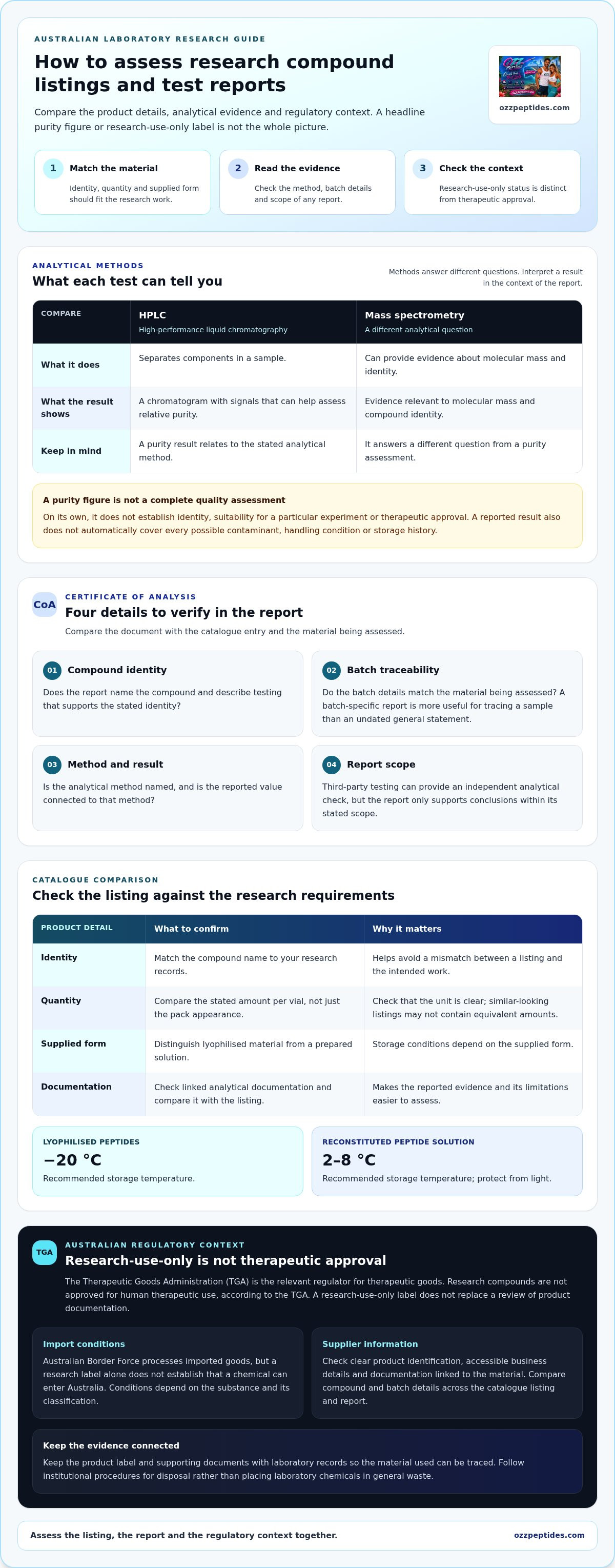
Read each product entry closely. Confirm the compound identity, quantity per vial, supplied form and any linked analytical documentation. Check that the listed unit is clear, such as mass per vial, rather than assuming similar-looking listings contain equivalent amounts. To understand laboratory handling considerations, consult this Australian research information.
For context on the safety and regulatory scrutiny around peptides, watch this report from 60 Minutes Australia:
Before choosing a vial, compare the details that affect your protocol and storage plan:
- Identity: match the compound name to your research records.
- Quantity: compare the stated amount per vial, not just pack appearance.
- Format: distinguish lyophilised material from a prepared solution.
These checks help prevent a mismatch between a catalogue listing and your experimental design. They also let you compare suppliers using clear product descriptions rather than broad claims about purity or value. Keep the product label and supporting documents with your laboratory records.
What do research compounds cost in Australia, including shipping and import fees? There is no single total: product cost varies by compound and vial size, while shipping and any applicable import fees affect the landed cost. Compare the full cost of the specific order, not just the advertised item price.
Storage also depends on the supplied form. Lyophilised peptides are recommended for storage at -20 °C; reconstituted peptide solution is recommended at 2-8 °C, protected from light. Factor these conditions into your laboratory setup before choosing a vial format.
Research-grade purity and analytical testing
A purity figure is useful only when considered alongside the testing method and sample details. It describes the proportion attributed to the target material under a stated analytical method. On its own, it does not establish identity, suitability for a particular experiment or therapeutic approval.
High-performance liquid chromatography (HPLC) separates components in a sample. Its chromatogram shows signals that can help assess relative purity. Mass spectrometry can provide evidence about molecular mass and identity. These methods answer different questions, so neither result should be treated as a complete quality assessment.
Review the Certificate of Analysis (CoA), not just its headline percentage. Check whether it names the compound, identifies the tested batch, describes the method and reports a result. Compare those details with the product label and your research records. A batch-specific report is more useful for tracing a sample than an undated general statement.
- Identity: does the report describe testing that supports the stated compound?
- Purity: is the value connected to a named analytical method?
- Traceability: does the batch information match the material being assessed?
Third-party testing can provide an independent analytical check, but the report’s scope still matters. A purity result does not automatically cover every possible contaminant, handling condition or storage history. Read the findings and method rather than assuming the certificate covers tests it does not mention. Keep the CoA with the relevant laboratory records so the material used can be traced.
For a practical comparison, review the available Certificates of Analysis and note which details help you assess each report. Compare each document with its catalogue entry, including compound identity and batch information. This makes the analytical documentation easier to interpret without treating one figure as proof of every quality attribute.
If you’re assessing laboratory materials, browse the research compound catalogue alongside the available analytical documentation. Focus on the evidence relevant to your protocol, and record any method limitations before interpreting results.
Research-use-only and TGA compliance
Research-use-only describes the intended context, not therapeutic approval. In Australia, check the compound’s status, import conditions and laboratory handling requirements before use.
Import rules for chemicals and laboratory samples
Australian Border Force processes imported goods, but a research label alone does not establish that a chemical can enter Australia. Import conditions depend on the substance and its classification. Before arranging an overseas shipment, identify the exact compound and check the relevant import requirements and documentation. A product description or supplier statement does not replace an assessment of the substance itself.
Supplier legitimacy checks
Assess an Australian supplier by checking clear product identification, accessible business details and documentation linked to the material. For example, compare the compound name and batch details on a Certificate of Analysis with the catalogue listing. Look for research-use wording that clearly distinguishes laboratory materials from therapeutic products. These checks help establish what is supplied and what evidence accompanies it.
Penalties for importing or possessing prohibited research chemicals depend on the substance’s classification, the conduct involved and applicable controls. There is no single penalty that applies to every chemical; the consequences depend on the circumstances.
For storage, keep lyophilised peptides at -20 °C; store reconstituted peptide solution at 2-8 °C, protected from light. Label containers with the compound identity and relevant batch details, and follow institutional procedures for disposal rather than placing laboratory chemicals in general waste.
Handling precautions depend on the compound and its safety documentation. Review the Safety Data Sheet before work, use the protective equipment and containment it specifies, and avoid exposure or handling outside an authorised laboratory protocol.
According to the Therapeutic Goods Administration, supplied compounds are not approved for human therapeutic use in Australia. Research-use-only materials are not medicines for human consumption or treatment.
Which Australian suppliers sell research compounds, and how can I verify their legitimacy?
In Australia, specialist laboratory suppliers and online research-compound retailers sell research compounds. Their catalogues can differ in compound range, vial formats, analytical documents and clarity about intended research use. Compare the actual product information, not just category labels or promotional wording.
Start by reviewing the supplier’s Australian business details and the information for each compound. A clear listing should identify the material and quantity, describe its research-use status and provide relevant product documentation. Check that the product-page wording matches the label and accompanying records.
Use a consistent review process for each supplier:
- Business identity: note the stated business name, Australian location and customer support details.
- Product records: compare the compound name and batch information across the listing, label and Certificate of Analysis.
- Research scope: look for clear laboratory-use language, not claims implying human treatment or therapeutic approval.
For example, if a catalogue page names one compound but its certificate identifies a different material or batch, the documentation does not clearly relate to that listing. If a purity claim appears without an identified method or report, it offers less information than a document with traceable details. These checks help you assess the evidence rather than relying on polished product descriptions alone.
Review practical terms before ordering, too. Identify whether dispatch is domestic or international, what shipping information is provided, and whether handling and storage expectations are explained. For an overseas shipment, check the compound’s import conditions separately. A supplier’s location or research-use label does not determine its status under Australian import rules.
Legitimacy checks rely on consistency and transparency, not a single badge or claim. Keep the listing and supplied documents with your laboratory records so you can trace the product identity and batch during research. Select materials only for laboratory research, not human consumption or treatment.
OZZ Peptides: Research Peptides
OZZ Peptides supplies Research Peptides, Research Reagents and Laboratory Research Compounds for laboratory research. Its catalogue serves researchers seeking laboratory materials with product information and supporting documentation to review.
As an Australian-owned and operated supplier, OZZ Peptides ships across Australia. Its research-grade peptides are backed by third-party Certificates of Analysis, which researchers can assess alongside compound details and their study requirements.
All compounds are intended strictly for laboratory research, not human consumption or therapeutic use. Review the product information and relevant Certificate of Analysis before selecting materials for a research project.
For research-focused product information, visit ozzpeptides.com.
Turn your research needs into a clear next step
Before ordering, turn your project brief into a concise purchasing record. Note the compound identity, intended laboratory application, material format, documentation requirements and storage capacity. This gives colleagues a shared basis for evaluating options and recording why a material fits the planned work. For research compounds in Australia, a consistent decision process is more useful than choosing by catalogue appearance alone.
Keep your selection tied to the experiment and your laboratory’s procedures. Record who reviewed the product information, which batch entered the study and how the material will be handled. This trail helps keep procurement records aligned with research activity as a project develops.
OZZ Peptides’ catalogue is a practical next step when assessing laboratory materials. Review the product information against your research requirements, then choose the option that fits your project.
A thoughtful purchasing process gives your research a clear starting point.
Frequently Asked Questions
What are research compounds, and what are they commonly used for?
Research compounds are materials used in controlled scientific or laboratory investigations, rather than products intended for personal treatment. Researchers may study a compound’s chemical properties, analyse a sample or examine its behaviour within a defined experimental model. For example, a laboratory might compare sample characteristics under documented conditions. A research label alone does not establish human safety, therapeutic benefit or approval for medical use.
Which research compounds are legal to possess or import in Australia?
There is no single answer for every compound: its status depends on the exact substance and the rules that apply. A research-use label does not establish that possession or import is permitted. Before acquiring a material, identify its precise chemical name and form, then assess the relevant Australian controls. Importing and possessing are separate questions, so consider both rather than assuming one permits the other.
What Australian laws regulate research chemicals and laboratory compounds?
Applicable controls depend on the compound, its classification, intended use and whether it crosses the border. The Therapeutic Goods Administration is the relevant regulator for therapeutic goods. According to the TGA, supplied compounds are not approved for human therapeutic use in Australia. This does not determine every compound’s possession or import status. Assess the exact substance against the controls relevant to its circumstances.
How can I check whether a research compound is listed as a controlled substance in Australia?
Start with the compound’s full chemical name, then note synonyms, salts and other forms that may appear under different names. Compare these details with current official Australian controlled-substance schedules and applicable import controls. Do not rely on a trade name or research-use label alone. Record the exact substance you checked, as similar names can refer to different materials.
What permits are required to import research compounds into Australia?
Permit requirements depend on the exact compound and its classification, so the product category alone cannot determine the answer. Identify the chemical name and form before planning an import, then establish which Australian import controls apply and whether they require permission or supporting documents. A supplier’s ability to offer a product does not establish that a particular import is authorised.
Disclaimer
Research Information Disclaimer
The information provided in this article is intended solely for general educational and scientific research purposes.
OZZ Peptides supplies laboratory research compounds and reagents for legitimate research applications only. Products labelled for research use are not intended for human or veterinary consumption, injection, diagnosis, treatment or prevention of disease.
Information about experimental compounds, scientific studies or preliminary research findings should not be interpreted as medical advice or evidence of regulatory approval.
Scientific findings may be preliminary, and research outcomes are not guaranteed.
Readers should consult appropriately qualified professionals and applicable Australian regulatory guidance before undertaking relevant research activities.