

 Image 1 of 1
VIP 10 mg – VPAC-Receptor Research | Neuroimmune and Vascular Signalling | Premium Research Compound
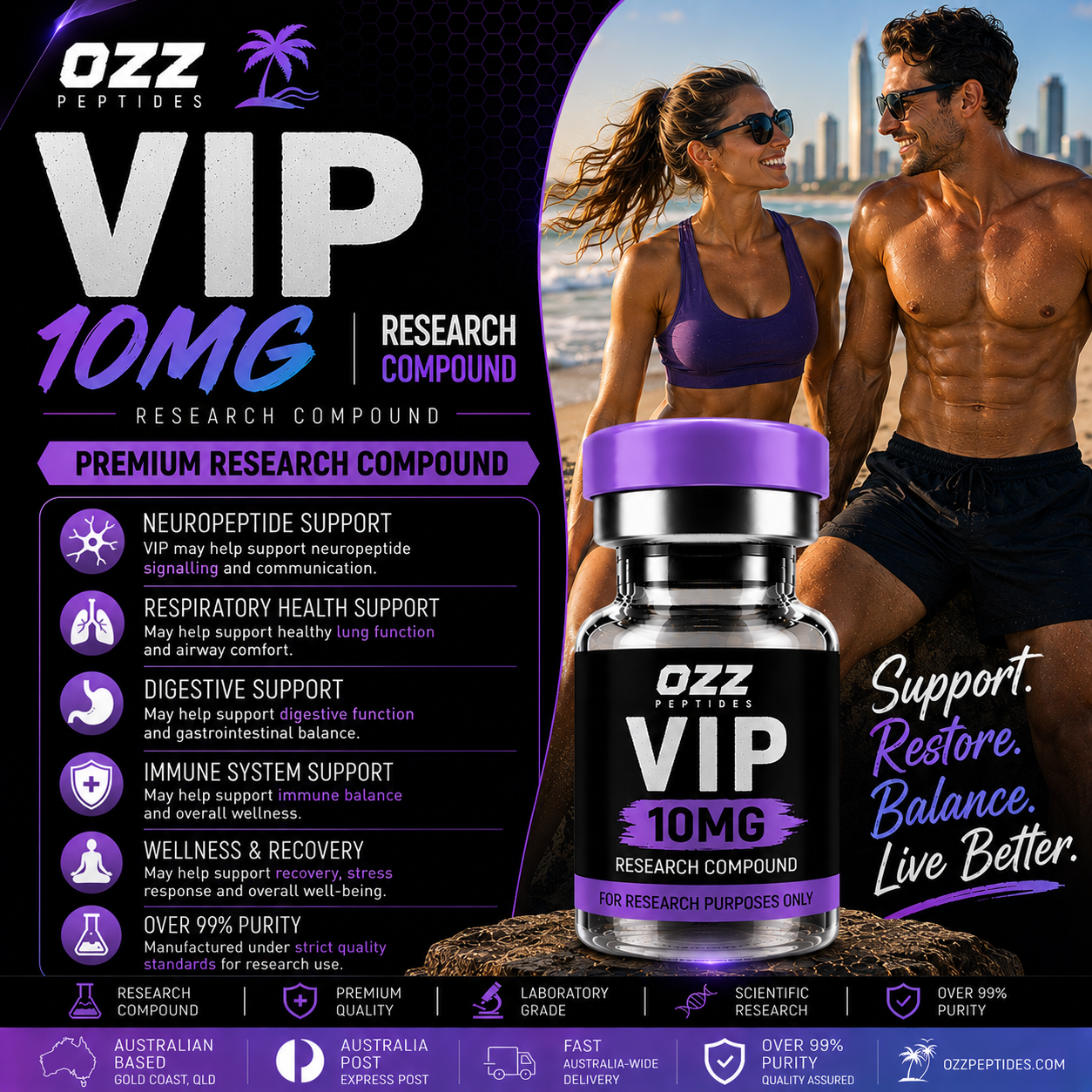
A premium research compound supplied in a convenient 10 mg vial.
VIP, or Vasoactive Intestinal Peptide, is a naturally occurring 28-amino-acid neuropeptide investigated in laboratory and preclinical research involving VPAC-receptor activity, vascular signalling, neuroimmune communication, smooth-muscle pathways, gastrointestinal signalling, and circadian regulation.
What’s Included
1x VIP 10 mg vial
Over 99% Purity
Premium-quality research compound
Shipped from the Gold Coast, Queensland
Australia Post Express Post
Why Choose VIP 10 mg?
Vasoactive Intestinal Peptide is a C-terminally amidated peptide found throughout the nervous, digestive, respiratory, cardiovascular, and immune systems.
Researchers investigate VIP in relation to:
VPAC1 and VPAC2 receptor activity
Cyclic-AMP-associated signalling
Vascular smooth-muscle pathways
Neuroimmune communication
Gastrointestinal signalling
Respiratory smooth-muscle research
Circadian-rhythm pathways
Neuroendocrine regulation
Its widespread receptor distribution makes VIP an important compound for specialised neurological, vascular, gastrointestinal, respiratory, immune, and circadian-signalling research.
VIP Research
VIP is commonly investigated in laboratory and preclinical research relating to:
VPAC1-receptor activation
VPAC2-receptor activation
G-protein-coupled-receptor signalling
Adenylate-cyclase and cyclic-AMP pathways
Vascular smooth-muscle activity
Gastrointestinal secretion and motility
Respiratory smooth-muscle signalling
Neurotransmitter and neuropeptide activity
Immune-cell communication
Cytokine-expression pathways
Circadian-clock signalling
Hypothalamic and neuroendocrine activity
Research continues into how VIP influences receptor-mediated signalling across nervous, immune, vascular, respiratory, and gastrointestinal systems.
Vasoactive Intestinal Peptide Research
VIP stands for Vasoactive Intestinal Peptide and is also described as a 28-amino-acid neuropeptide belonging to the secretin/glucagon peptide family.
It is composed of the following C-terminally amidated sequence:
His-Ser-Asp-Ala-Val-Phe-Thr-Asp-Asn-Tyr-Thr-Arg-Leu-Arg-Lys-Gln-Met-Ala-Val-Lys-Lys-Tyr-Leu-Asn-Ser-Ile-Leu-Asn-NH₂
Researchers investigate this specialised peptide for its potential to:
Bind to VPAC1 and VPAC2 receptors
Activate cyclic-AMP-associated signalling
Influence vascular smooth-muscle pathways
Affect gastrointestinal signalling
Support neuroimmune-communication research
Influence circadian and neuroendocrine pathways
Assist investigation of respiratory-cell signalling
VIP binds with high affinity to VPAC1 and VPAC2, which are class B G-protein-coupled receptors. It may also interact with the PAC1 receptor at lower affinity under certain experimental conditions.
Available evidence includes laboratory, preclinical, and limited clinical research involving specific preparations and controlled conditions. Further research is required to establish the activity, safety, and characteristics of independently supplied VIP research preparations.
Premium Research Compound. One Easy Order.
OZZ Peptides VIP 10 mg provides researchers with a convenient option for investigating VPAC-receptor activity, vascular signalling, neuroimmune communication, gastrointestinal pathways, and circadian regulation.
Securely packed and shipped directly from the Gold Coast using Australia Post Express Post.
Product Highlights
🧬 28-Amino-Acid Neuropeptide
A naturally occurring, C-terminally amidated signalling peptide.
🔬 VPAC-Receptor Research
Investigated for its activity at VPAC1 and VPAC2 receptors.
🩸 Vascular-Signalling Research
Studied in laboratory models involving vascular smooth-muscle and circulatory signalling.
🧠 Neuroimmune Research
Investigated in relation to communication between nervous-system and immune-cell pathways.
🫁 Respiratory-Pathway Research
Used in experimental studies involving airway and respiratory smooth-muscle signalling.
🕐 Circadian-Signalling Research
Studied for its role in hypothalamic clock and daily-rhythm pathways.
💎 Over 99% Purity
Premium-quality research compound.
📦 Fast Australian Delivery
Sent using Australia Post Express Post.
🌴 Gold Coast Based
Packed and shipped by the OZZ Peptides team in Queensland.
What You’ll Receive
1x VIP 10 mg vial
Securely packed for delivery
Australia Post Express Post
Storage
Store according to the storage information supplied with the product.
Before reconstitution, keep the vial in a cool, dry environment away from direct sunlight. After reconstitution, appropriate refrigerated storage may be required according to the supplier’s specifications and applicable laboratory protocol.
Important Information
Products supplied by OZZ Peptides are intended for laboratory research purposes only and are not intended for human consumption, injection, respiratory treatment, blood-pressure management, immune enhancement, gastrointestinal treatment, diagnosis, treatment, cure, or prevention of any disease.
This VIP research preparation has not been evaluated by the Australian Therapeutic Goods Administration for safety, quality, or effectiveness and is not supplied as an approved medicine.
A premium research compound supplied in a convenient 10 mg vial.
VIP, or Vasoactive Intestinal Peptide, is a naturally occurring 28-amino-acid neuropeptide investigated in laboratory and preclinical research involving VPAC-receptor activity, vascular signalling, neuroimmune communication, smooth-muscle pathways, gastrointestinal signalling, and circadian regulation.
What’s Included
1x VIP 10 mg vial
Over 99% Purity
Premium-quality research compound
Shipped from the Gold Coast, Queensland
Australia Post Express Post
Why Choose VIP 10 mg?
Vasoactive Intestinal Peptide is a C-terminally amidated peptide found throughout the nervous, digestive, respiratory, cardiovascular, and immune systems.
Researchers investigate VIP in relation to:
VPAC1 and VPAC2 receptor activity
Cyclic-AMP-associated signalling
Vascular smooth-muscle pathways
Neuroimmune communication
Gastrointestinal signalling
Respiratory smooth-muscle research
Circadian-rhythm pathways
Neuroendocrine regulation
Its widespread receptor distribution makes VIP an important compound for specialised neurological, vascular, gastrointestinal, respiratory, immune, and circadian-signalling research.
VIP Research
VIP is commonly investigated in laboratory and preclinical research relating to:
VPAC1-receptor activation
VPAC2-receptor activation
G-protein-coupled-receptor signalling
Adenylate-cyclase and cyclic-AMP pathways
Vascular smooth-muscle activity
Gastrointestinal secretion and motility
Respiratory smooth-muscle signalling
Neurotransmitter and neuropeptide activity
Immune-cell communication
Cytokine-expression pathways
Circadian-clock signalling
Hypothalamic and neuroendocrine activity
Research continues into how VIP influences receptor-mediated signalling across nervous, immune, vascular, respiratory, and gastrointestinal systems.
Vasoactive Intestinal Peptide Research
VIP stands for Vasoactive Intestinal Peptide and is also described as a 28-amino-acid neuropeptide belonging to the secretin/glucagon peptide family.
It is composed of the following C-terminally amidated sequence:
His-Ser-Asp-Ala-Val-Phe-Thr-Asp-Asn-Tyr-Thr-Arg-Leu-Arg-Lys-Gln-Met-Ala-Val-Lys-Lys-Tyr-Leu-Asn-Ser-Ile-Leu-Asn-NH₂
Researchers investigate this specialised peptide for its potential to:
Bind to VPAC1 and VPAC2 receptors
Activate cyclic-AMP-associated signalling
Influence vascular smooth-muscle pathways
Affect gastrointestinal signalling
Support neuroimmune-communication research
Influence circadian and neuroendocrine pathways
Assist investigation of respiratory-cell signalling
VIP binds with high affinity to VPAC1 and VPAC2, which are class B G-protein-coupled receptors. It may also interact with the PAC1 receptor at lower affinity under certain experimental conditions.
Available evidence includes laboratory, preclinical, and limited clinical research involving specific preparations and controlled conditions. Further research is required to establish the activity, safety, and characteristics of independently supplied VIP research preparations.
Premium Research Compound. One Easy Order.
OZZ Peptides VIP 10 mg provides researchers with a convenient option for investigating VPAC-receptor activity, vascular signalling, neuroimmune communication, gastrointestinal pathways, and circadian regulation.
Securely packed and shipped directly from the Gold Coast using Australia Post Express Post.
Product Highlights
🧬 28-Amino-Acid Neuropeptide
A naturally occurring, C-terminally amidated signalling peptide.
🔬 VPAC-Receptor Research
Investigated for its activity at VPAC1 and VPAC2 receptors.
🩸 Vascular-Signalling Research
Studied in laboratory models involving vascular smooth-muscle and circulatory signalling.
🧠 Neuroimmune Research
Investigated in relation to communication between nervous-system and immune-cell pathways.
🫁 Respiratory-Pathway Research
Used in experimental studies involving airway and respiratory smooth-muscle signalling.
🕐 Circadian-Signalling Research
Studied for its role in hypothalamic clock and daily-rhythm pathways.
💎 Over 99% Purity
Premium-quality research compound.
📦 Fast Australian Delivery
Sent using Australia Post Express Post.
🌴 Gold Coast Based
Packed and shipped by the OZZ Peptides team in Queensland.
What You’ll Receive
1x VIP 10 mg vial
Securely packed for delivery
Australia Post Express Post
Storage
Store according to the storage information supplied with the product.
Before reconstitution, keep the vial in a cool, dry environment away from direct sunlight. After reconstitution, appropriate refrigerated storage may be required according to the supplier’s specifications and applicable laboratory protocol.
Important Information
Products supplied by OZZ Peptides are intended for laboratory research purposes only and are not intended for human consumption, injection, respiratory treatment, blood-pressure management, immune enhancement, gastrointestinal treatment, diagnosis, treatment, cure, or prevention of any disease.
This VIP research preparation has not been evaluated by the Australian Therapeutic Goods Administration for safety, quality, or effectiveness and is not supplied as an approved medicine.